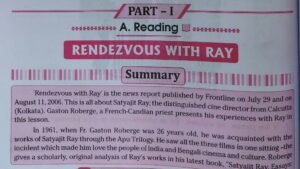
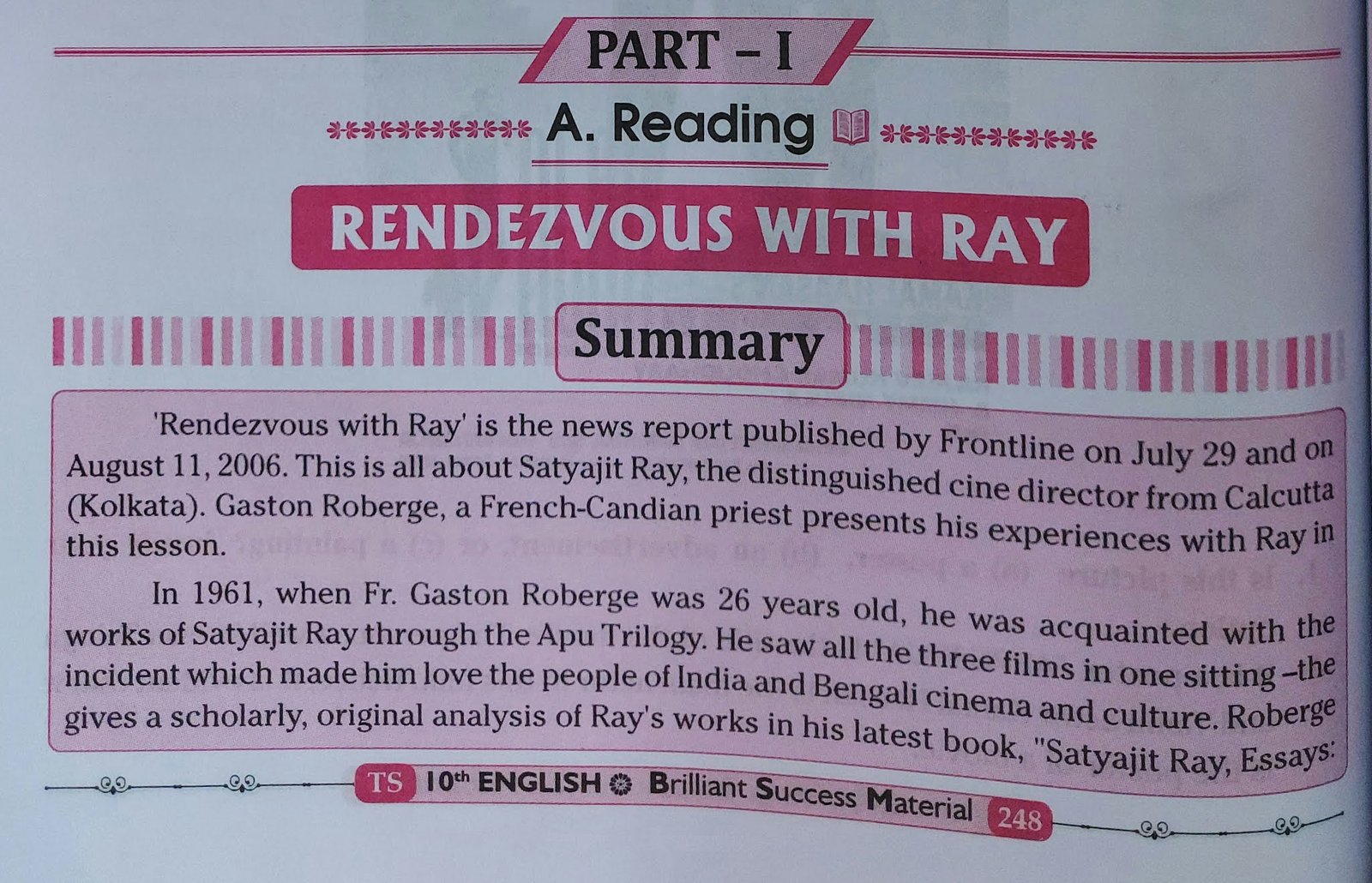
Comprehension
Q1]What did Ray’s detractors accuse him of ? Did Roberge agree to their accusation ? If
not, why ?
A]Ray’s detractors accused him that he made his reputation selling India’s poverty to
the West. Roberge didn’t agree to their accusation. He was not attracted by the material
poverty depicted in Ray’s films. The thing struck him most was that the enormous
spiritual poverty of some rich people is much more deplorable than material poverty.
Q2]’I didn’t come here to convert. In fact, I am the one who got converted.’ Who said
these words ? What different shades of meanings do you find in the words of the
speaker ?
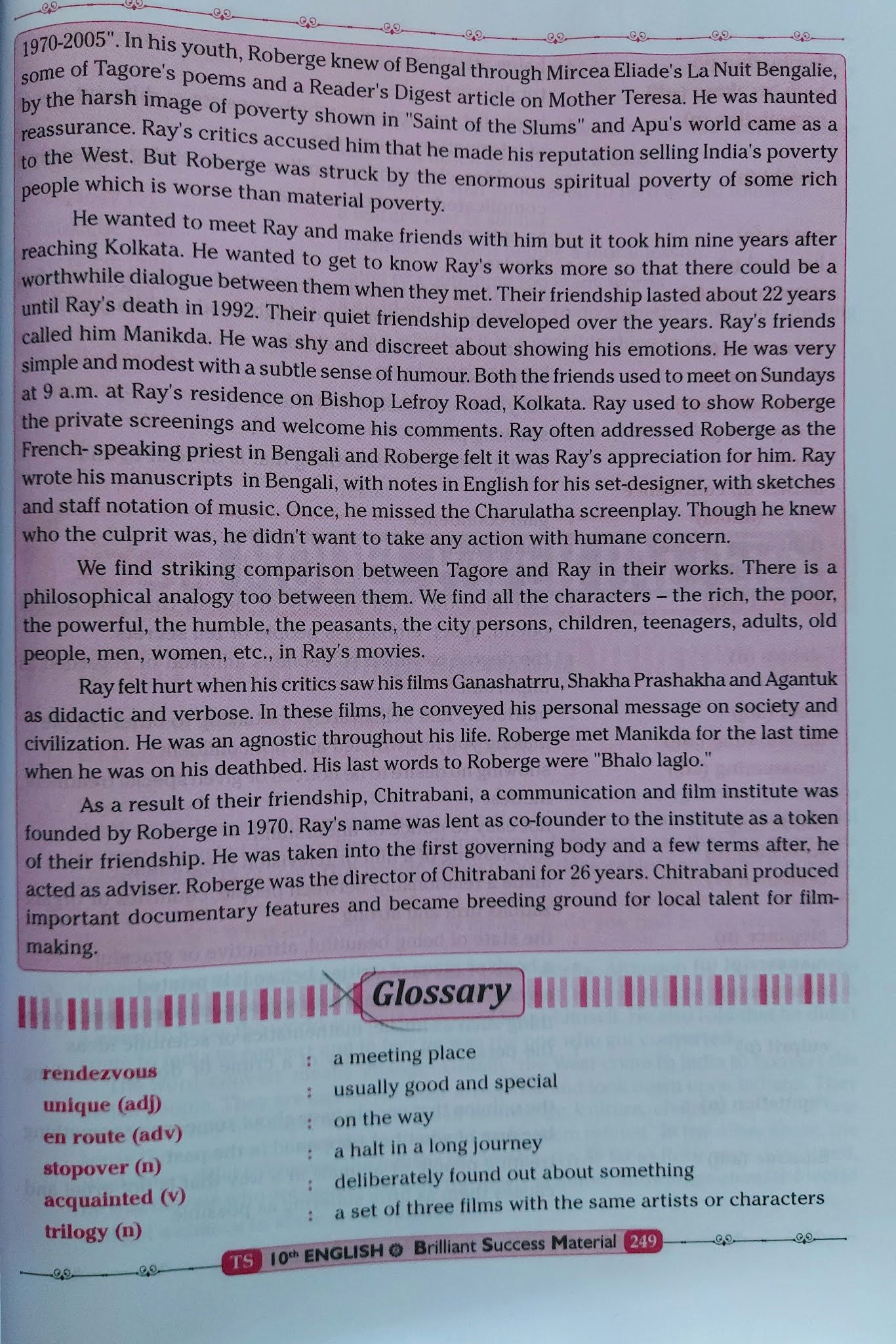
A]Roberge, the French-Canadian priest said these words. Although he came from the speaker ? West, he didn’t speak with the arrogance of the West. He told that he came to India on a quest to know the world and in the process know himself. He also told that he didn’t come to India to convert and in fact he was the one who got converted. The word ‘convert’ means ‘change’. Usually, the West come to India to convert the
Indian people. They are known for their arrogance and look down upon Indians. They
think that they are superiors in terms of knowledge, culture, civilization, etc. In one
sense they want to convert the Indians and make them refined. In the other sense, the
Westerners want to convert the Indians to Christianity. As far as Roberge is concerned,
he was the one who got converted with the newly acquired knowledge about the world
and got a chance to know about himself.
Q3]Roberge took nine years to meet Ray in person after joining St. Xavier’s college.
Why did he take so long ? What would you do if you were in his place?
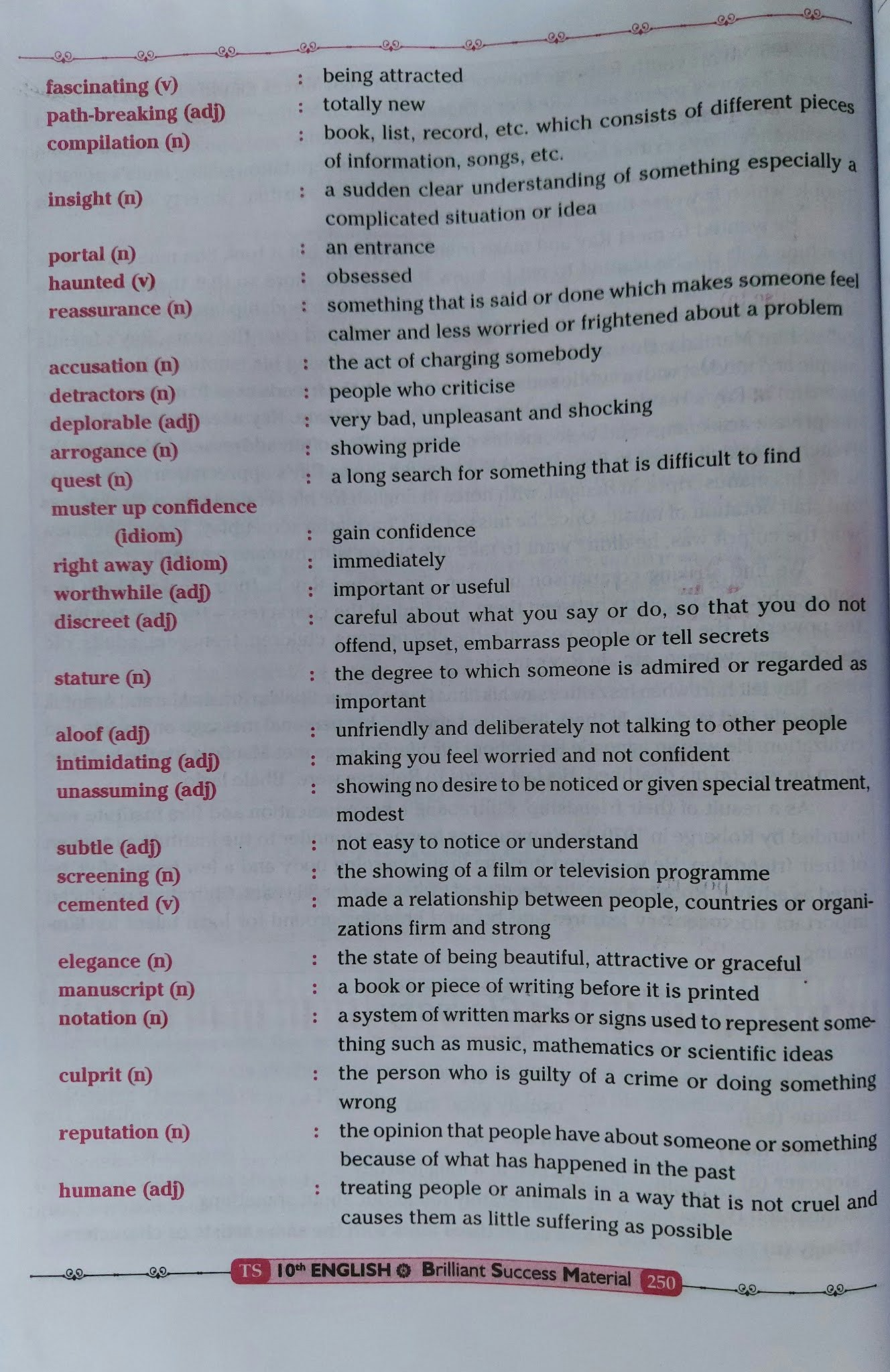
A]Roberge wanted to meet Ray in person but it took him nine years after reaching Kolkata and joining St. Xavier’s college, to meet him. Although he wanted to meet Ray right away, he didn’t want to just go and see him as he was a living museum piece. Roberge wanted to prepare himself, get to know his works more, so that when they met, there could be a worthwhile dialogue between them. If I were in Roberge’s place, I would do the same as he did.
Q4]How was Ray perceived by the outsiders? Was this perception true of Ray’s real
character?
A]The outsiders perceived Ray that Ray’s massive physical and intellectual stature might
have made him come across as cold, aloof and even intimidating. This perception was
not true of Ray’s real character. In reality, Ray was a very simple and unassuming man
with a subtle sense of humour.
Q5]What is meant by the line, ‘Ray took off where Tagore signed out.’ ? What was Ray
searching for?
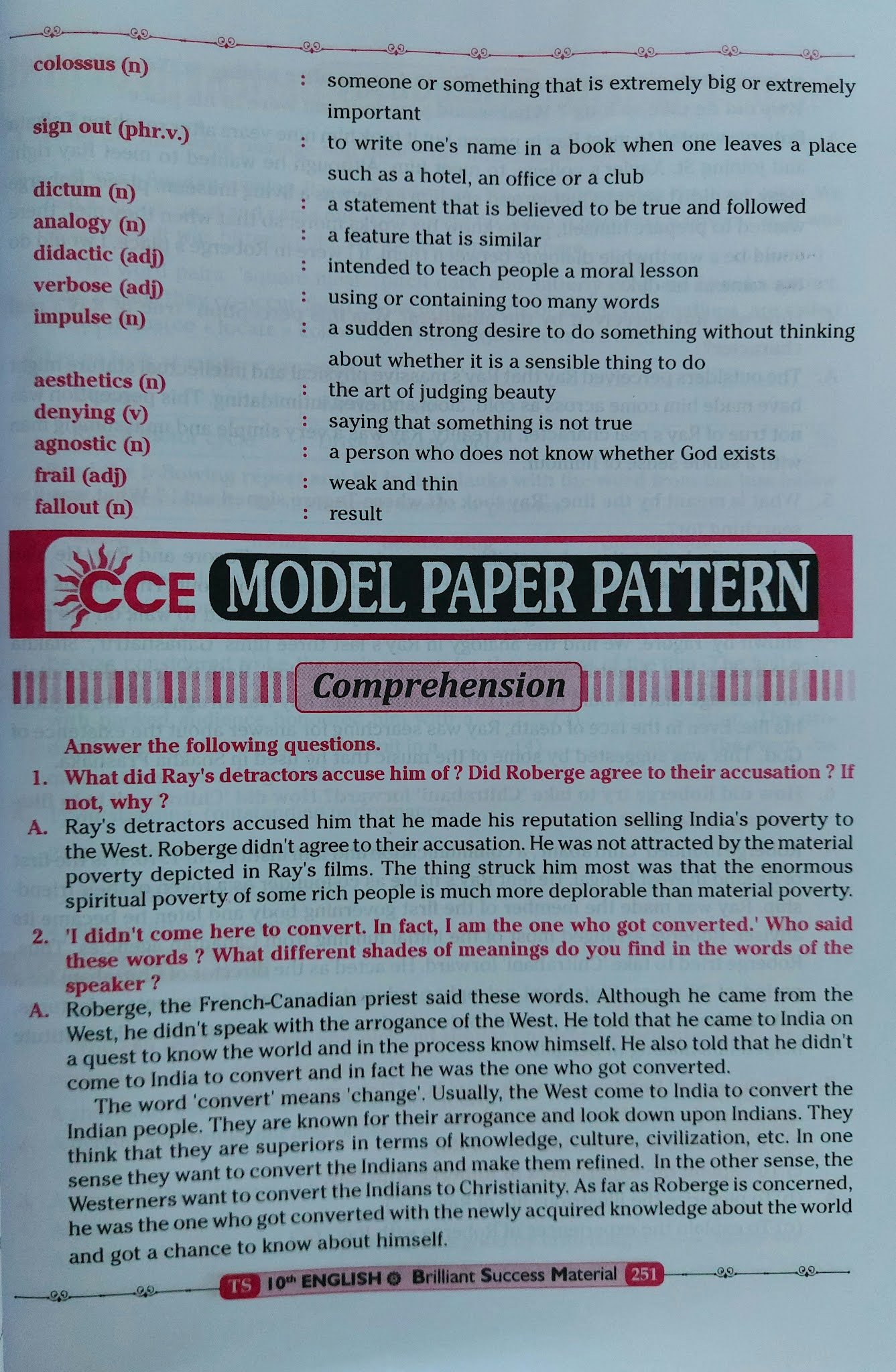
A]Roberge feels that there is a striking comparison between Tagore and Ray. He also
feels that philosophically too, Ray took off where Tagore signed out. This means that
Ray began his work where Tagore ended. In a way, Ray continued to walk on the path
shown by Tagore. We find the analogy in Ray’s last three films ‘Ganashatru’, ‘Shakha
Prashakha’ and ‘Agantuk’ with Tagore’s ‘Shabhyatar Sankat’. Both their works contain
the message that it would be a sin to lose faith in man. Ray was an agnostic throughout
his life. Even in the face of death, Ray was searching for answer about the existence of
God. This was suggested by some of the music that he used in Shakha Prashaka.
Q6]How did Roberge try to take ‘Chitrabani’ forward? How did ‘Chitrabani’ help film-
making in Bengali?
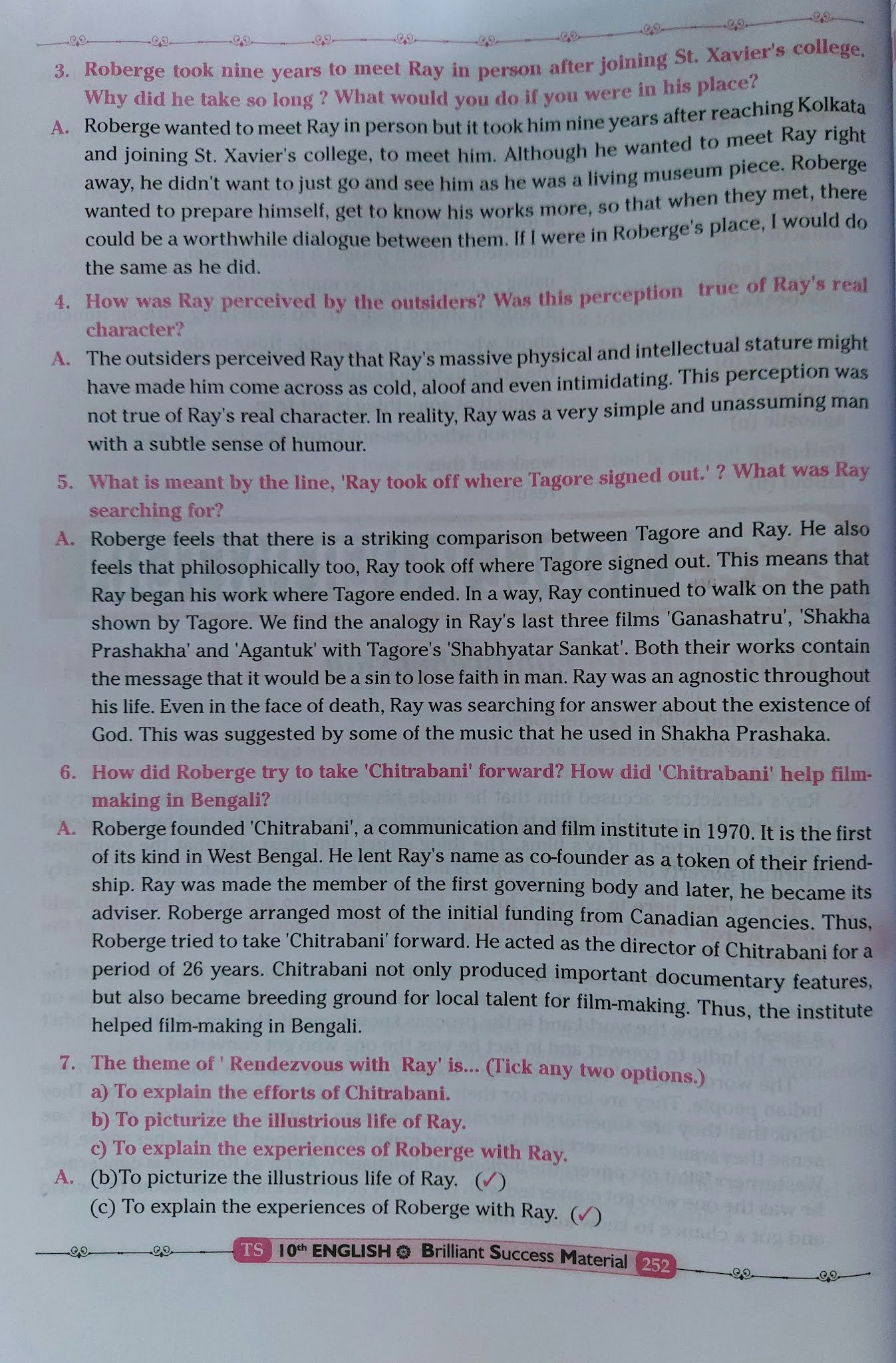
A]Roberge founded ‘Chitrabani’, a communication and film institute in 1970. It is the first
of its kind in West Bengal. He lent Ray’s name as co-founder as a token of their friend-
ship. Ray was made the member of the first governing body and later, he became its
adviser. Roberge arranged most of the initial funding from Canadian agencies. Thus,
Roberge tried to take ‘Chitrabani’ forward. He acted as the director of Chitrabani for a
period of 26 years. Chitrabani not only produced important documentary features
but also became breeding ground for local talent for film-making. Thus, the institute
helped film-making in Bengali.
Q7]The theme of’ Rendezvous with Ray’ is … (Tick any two options.)
a) To explain the efforts of Chitrabani.
b) To picturize the illustrious life of Ray.
c) To explain the experiences of Roberge with Ray.
A](b)To picturize the illustrious life of Ray. (✓)
(c) To explain the experiences of Roberge with Ray. (✓)