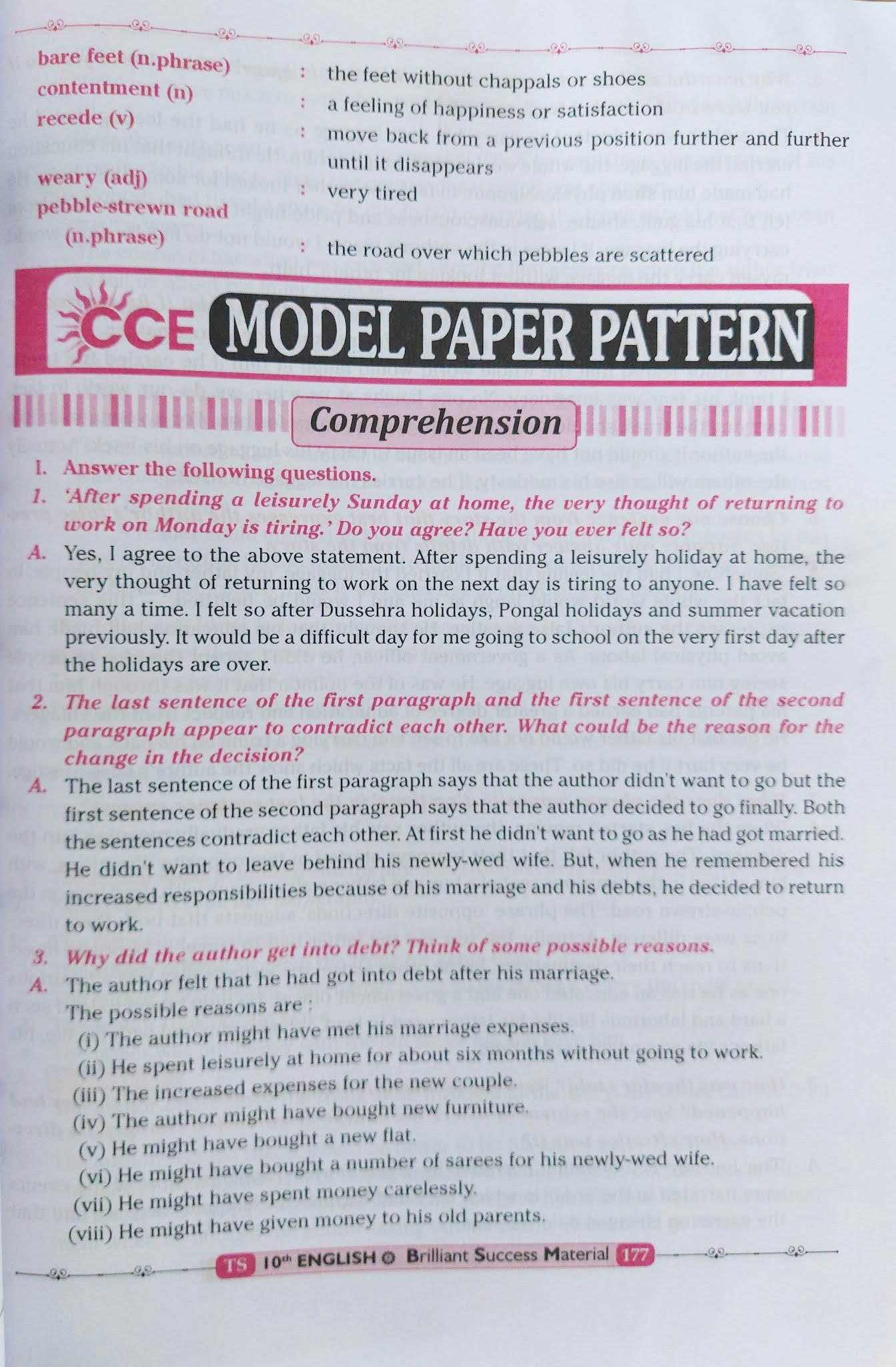
Comprehension
Q1]’After spending a leisurely Sunday at home, the very thought of returning to
work on Monday is tiring.’ Do you agree? Have you ever felt so?
A]Yes, I agree to the above statement. After spending a leisurely holiday at home, the
very thought of returning to work on the next day is tiring to anyone. I have felt so
many a time. I felt so after Dussehra holidays, Pongal holidays and summer vacation
previously. It would be a difficult day for me going to school on the very first day after
the holidays are over.
Q2]The last sentence of the first paragraph and the first sentence of the second
paragraph appear to contradict each other. What could be the reason for the
change in the decision?
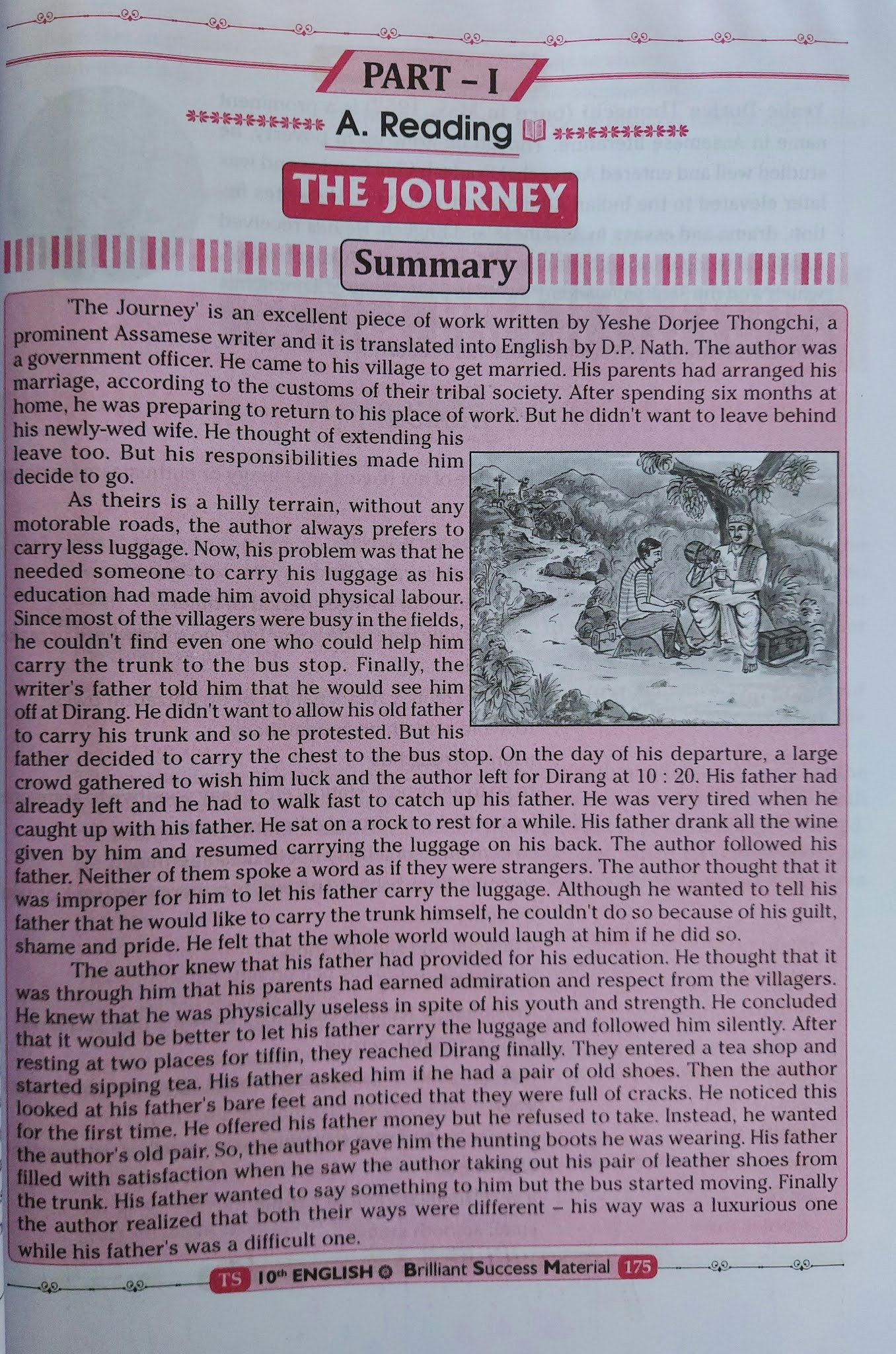
A]The last sentence of the first paragraph says that the author didn’t want to go but the
first sentence of the second paragraph says that the author decided to go finally. Both
the sentences contradict each other. At first he didn’t want to go as he had got married.
He didn’t want to leave behind his newly-wed wife. But, when he remembered his
increased responsibilities because of his marriage and his debts, he decided to return
to work.
Q3]Why did the author get into debt? Think of some possible reasons.
A]The author felt that he had got into debt after his marriage.
The possible reasons are :
(i) The author might have met his marriage expenses.
(ii) He spent leisurely at home for about six months without going to work.
(iii) The increased expenses for the new couple.
(iv) The author might have bought new furniture.
(v) He might have bought a new flat.
(vi) He might have bought a number of sarees for his newly-wed wife.
(vii) He might have spent money carelessly.
(viii) He might have given money to his old parents.
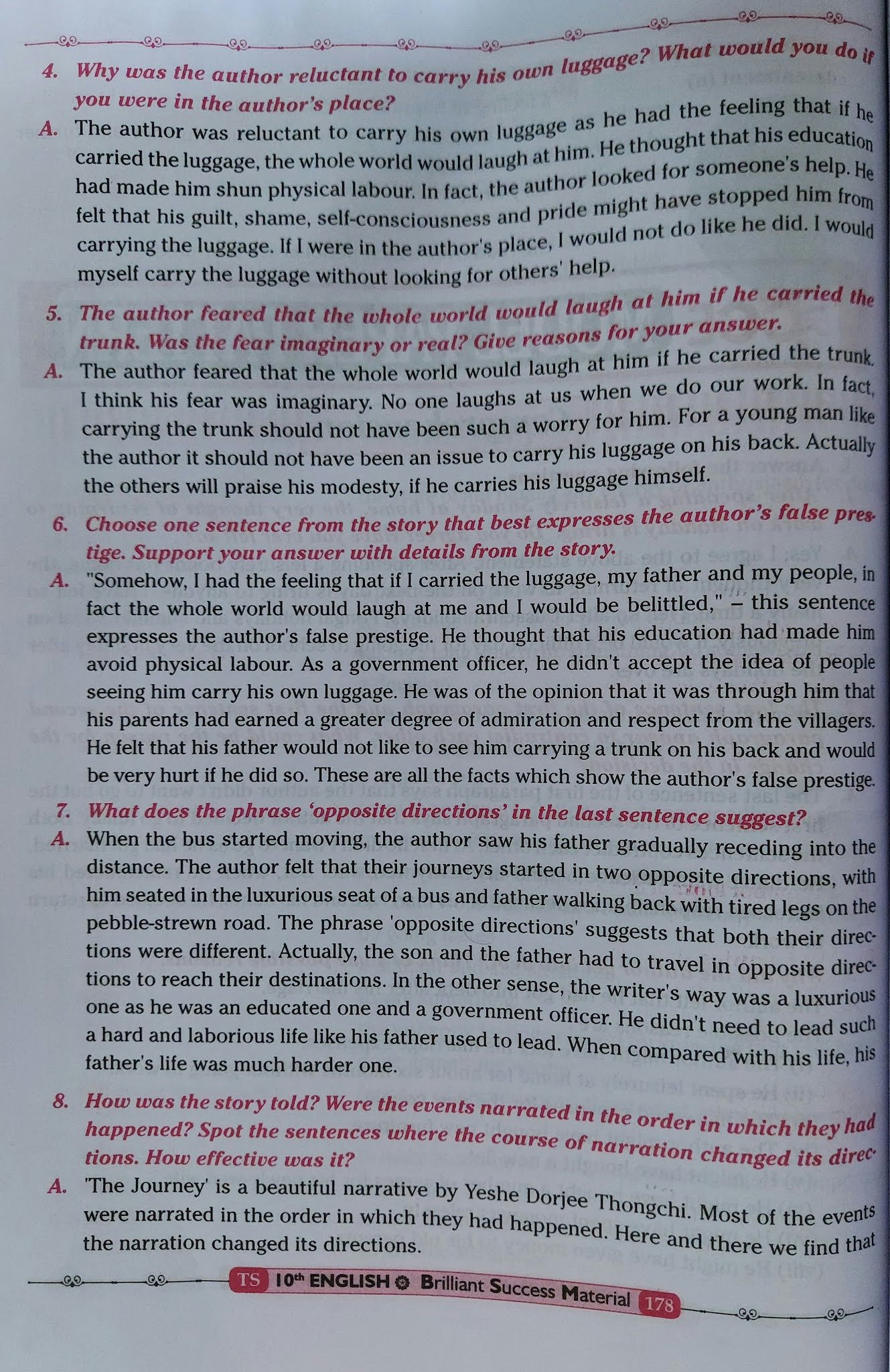
Q4]Why was the author reluctant to carry his own luggage? What would you do ie
you were in the author’s place?
A]The author was reluctant to carry his own luggage as he had the feeling that if he
carried the luggage, the whole world would laugh at him. He thought that his education
had made him shun physical labour. In fact, the author looked for someone’s help. He
felt that his guilt, shame, self-consciousness and pride might have stopped him from
carrying the luggage. If I were in the author’s place, I would not do like he did. I would
myself carry the luggage without looking for others’ help.
Q5]The author feared that the whole world would laugh at him if he carried the
trunk. Was the fear imaginary or real? Give reasons for your answer.
A]The author feared that the whole world would laugh at him if he carried the trunk
I think his fear was imaginary. No one laughs at us when we do our work. In fact.
carrying the trunk should not have been such a worry for him. For a young man like
the author it should not have been an issue to carry his luggage on his back. Actually
the others will praise his modesty, if he carries his luggage himself.
Q6]Choose one sentence from the story that best expresses the author’s false pres-
tige. Support your answer with details from the story.
A]tige. Support your answer with details from the story.
“Somehow, I had the feeling that if I carried the luggage, my father and my people, in
fact the whole world would laugh at me and I would be belittled,” – this sentence
expresses the author’s false prestige. He thought that his education had made him
avoid physical labour. As a government officer, he didn’t accept the idea of people
seeing him carry his own luggage. He was of the opinion that it was through him that
his parents had earned a greater degree of admiration and respect from the villagers.
He felt that his father would not like to see him carrying a trunk on his back and would
be very hurt if he did so. These are all the facts which show the author’s false prestige.
Q7]What does the phrase ‘opposite directions’ in the last sentence suggest?
A]When the bus started moving, the author saw his father gradually receding into the
distance. The author felt that their journeys started in two opposite directions, with
him seated in the luxurious seat of a bus and father walking back with tired legs on the
pebble-strewn road. The phrase ‘opposite directions’ suggests that both their direc-
tions were different. Actually, the son and the father had to travel in opposite direc-
tions to reach their destinations. In the other sense, the writer’s way was a luxurious
one as he was an educated one and a government officer. He didn’t need to lead such
a hard and laborious life like his father used to lead. When compared with his life, his
father’s life was much harder one.
Q8]How was the story told? Were the events narrated in the order in which they had
happened? Spot the sentences
tions. How effective was it?
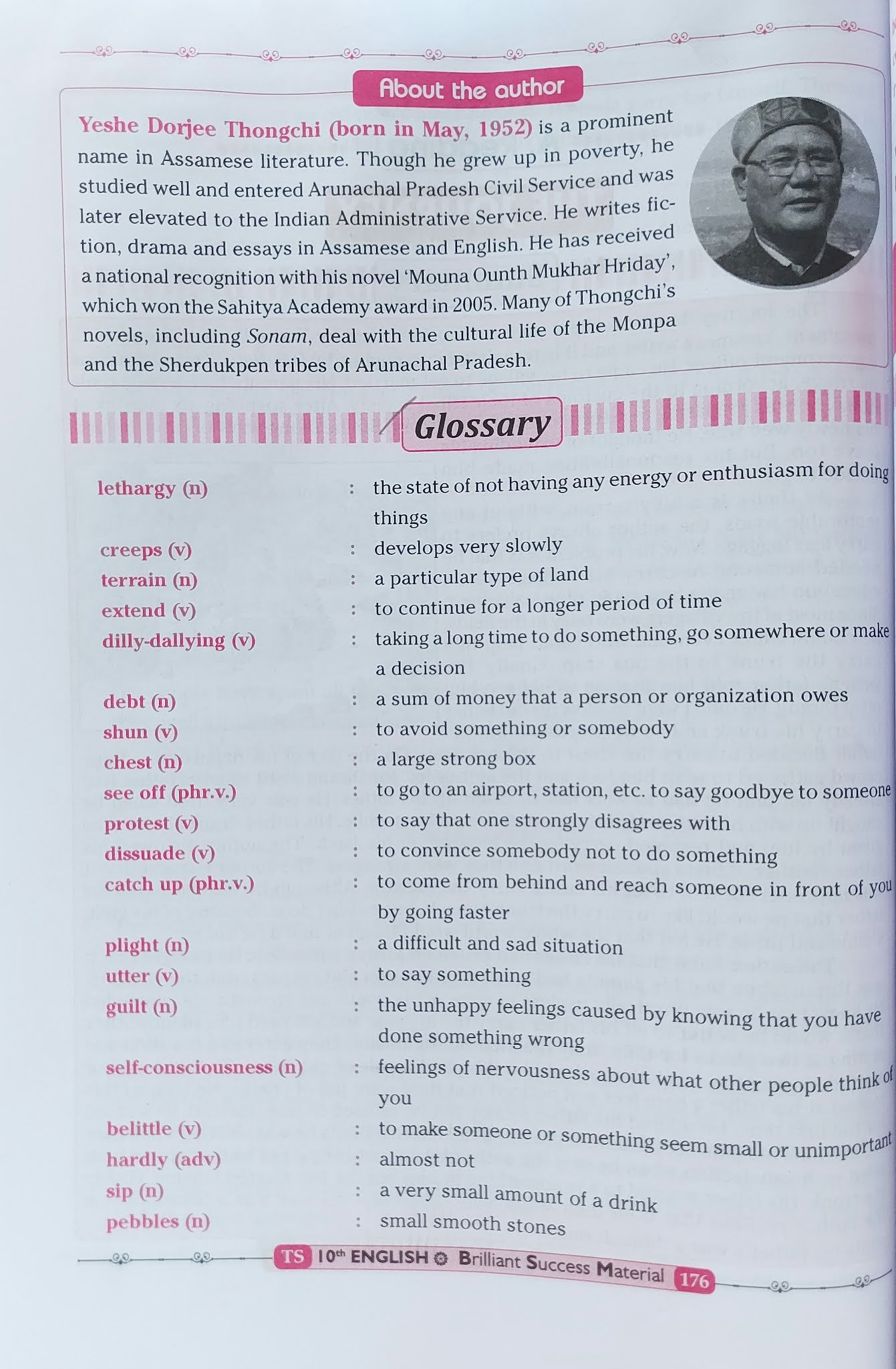
A]’The Journey’ is a beautiful narrative by Yeshe Dorjee Thongchi. Most of the events
were narrated in the order in which they had happened. Here and there we find that
the narration changed its directions.
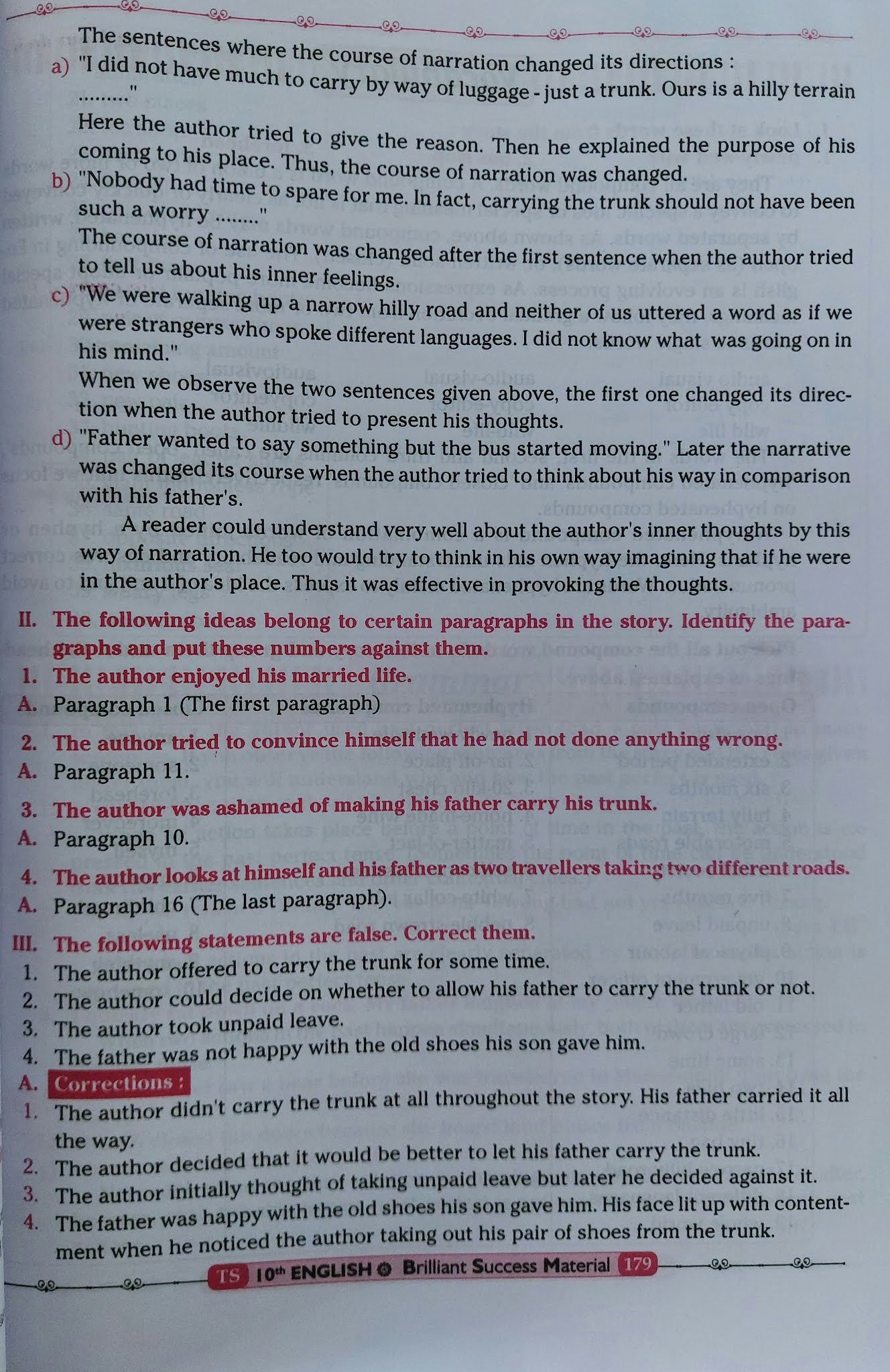
The sentences where the course of narration changed its directions :
a) “I did not have much to carry by way of luggage – just a trunk. Ours is a hilly terrain
Here the author tried to give the reason. Then he explained the purpose of his
coming to his place. Thus, the course of narration was changed.
b) “Nobody had time to spare for me. In fact, carrying the trunk should not have been
such a worry
The course of narration was changed after the first sentence when the author tried
to tell us about his inner feelings.
c) “We were walking up a narrow hilly road and neither of us uttered a word as if we
were strangers who spoke different languages. I did not know what was going on in
his mind.”
When we observe the two sentences given above, the first one changed its direc-
tion when the author tried to present his thoughts.
d) “Father wanted to say something but the bus started moving.” Later the narrative
was changed its course when the author tried to think about his way in comparison
with his father’s.
A reader could understand very well about the author’s inner thoughts by this
way of narration. He too would try to think in his own way imagining that if he were
in the author’s place. Thus it was effective in provoking the thoughts.